Thrice-Exceptional (3e): Intentionally Opening the World of Twice Exceptionality for Culturally Diverse Learners
Dr. Joy Lawson Davis introduces the 3e framework — culturally diverse, gifted, and twice-exceptional learners who are too often underserved in schools.

Note to our readers: At Young Scholars Academy, we love bringing in experts who understand our kids – their strengths and their challenges. In this blog, we wanted to bring in an expert on culturally diverse twice-exceptional learners: Dr. Joy Lawson Davis, Core Faculty, Bridges Graduate School for Cognitive Diversity (Joy.LawsonDavis@bridges.edu). Joy Lawson Davis, Ed. D., is a career educator and an award-winning scholar and author in gifted education. Joy has served as a member of the Board of Directors for the National Association for Gifted Children (NAGC) and is an author of five books and an instructor in gifted and cultural diversity education.
This post originally appeared as an article in the February 2024 issue of Teaching for High Potential, published by the National Association for Gifted Children (NAGC, https://nagc.org), and is printed here with permission from NAGC. Copyright 2024, National Association for Gifted Children. All rights reserved.
Several years ago, as I continued to engage with school leaders and advocates to close the gaps in gifted education services, particularly as related to meeting the needs of our most underserved populations, I discovered another population of students that was gravely underserved in gifted and advanced learner services. This discovery came about from multiple contexts, including but not limited to—conversations with colleagues and culturally diverse parents, meetings with school personnel, a review of the literature, and continuously keeping track of online services that were erupting across the nation designed to draw attention to the needs of twice-exceptional learners. Across all these groups what became evident was that once again, culturally diverse learners—in particular Black, Brown, and low-income gifted learners were being overlooked. As a lifetime advocate and scholar representing underrepresented gifted learners, I felt compelled to speak up.
In our field, there continues to be a group of highly able students of color and from poverty circumstances who are made invisible by a system created to diminish the dreams of the students who most need public school services to realize their potential.
Why 3e?
Twice exceptional (2e) describes learners who have been designated as gifted/highly able/advanced and who also have another exceptional condition (e.g., learning disability), attention deficit disorder, or physical disability. The research notes that these students are often underrepresented and underserved in gifted education programs nationwide. Culturally diverse gifted students (particularly Black, Brown, low-income gifted) are also underrepresented and underserved in gifted education. In my view, this category of underrepresentation creates another group of exceptional learners. As such, to create a paradigm that provides space for attention to the needs of culturally diverse twice exceptional learners, they have been designated as 3e. In an earlier publication, I indicated that “the 3e label signifies three exceptional conditions: being culturally diverse members of a socially oppressed group; being gifted or having high potential; and simultaneously being LD or having another disabling condition (such as dyslexia)”. (Davis & Robinson, 2018, p.279).
In the field of gifted and advanced learner services, without attention from scholars, researchers, and K-12 practitioners, entire groups of students will continue to be “left out”, “disincluded” or even made “invisible.” These students are therefore made exceptional simply by their invisible status. I know that some of my colleagues in the field disagree with this distinction of culture/ethnic group as a third exceptional condition. In my view, however, until fair and equitable attention is given to culturally diverse twice-exceptional learners, language will be our tool to draw attention to these very remarkable learners in our schools nationwide. These students are also affected by their cultural origins and conditions of rurality, urban and suburban living. Thus, to mediate their disadvantages, examining the literature relevant to their varied cultures and geographic regions of origin are needed. From a holistic viewpoint, in order to exacerbate the challenges they face and develop appropriate service options, it is absolutely imperative to make space for them in the world of twice exceptionality.
Urgency of Inclusion of Research and Attention to Culturally Diverse Gifted 2e Learners
The census reports that an increasing number of students attending public schools will be culturally diverse and living in poverty. Among this set of students will be many who will qualify for gifted and advanced learner programs. Public school instructional and support services must be designed to address their needs. To create models that are substantive, we need intentional research and evidence-based practices that match their cultural needs as well as their academic needs. A growing number of scholars and advocates are interested in working to meet the needs of all 2e students, including those who are culturally diverse. As a domain, gifted education/advanced learner programs can assist them and therefore help the students by increasing attention to their differences and similarities to other majority culture 2e students.
Over the past 3 years, I have had the privilege of teaching a graduate course designed to help students address underservice to culturally diverse learners who are also twice exceptional. In my courses, I have engaged with students with sensitivity, open minds and innovative ideas. I believe that their responses to meeting the needs of culturally diverse 2e students have been this way because we have been intentional in reviewing a variety of literature by diverse scholars, had difficult conversations regarding social justice, and have intentionally targeted the academic, intellectual, and psychosocial needs and supports of these unique gifted learners (2e) from culturally diverse backgrounds. These intentional conversations and opening of pathways to developing unique program services have created new culturally competent gifted education service models for diverse 2e learners in ways that have not been discovered prior to this time. The simple, yet complex act of being intentional has already made a difference for the potential of new research and practices that will benefit culturally diverse 2e students nationwide and is beginning to make a difference. Over time, with additional attention to research and new practices, the doors for culturally diverse 2e or 3e students will widen, enabling our field to be more inclusive and equitable.
Resources to Consider
Anderson, B. N. (2020). “See me, See us”: Understanding the intersections and continued marginalization of adolescent gifted Black girls in U.S. classrooms. Gifted Child Today, 43(2), 86–100. https://doi.org/10.1177/1076217519898216
Bridges 2e Center Crucial Conversations https://2ecenter.org/crucial-conversations/
Davis, J. L. & Robinson, S. A. (2018). Being 3e: A new look at culturally diverse gifted learners with exceptional conditions: An examination of the issues and solutions for educators and families. In S.B. Kaufman (Ed.) Twice exceptional: Supporting and educating bright and creative students with learning difficulties. DOI:10.1093/oso/9780190645472.003.0017 Oxford University Press
Edmin, C. (2017). For White folks who teach in the hood and the rest of y’all too: Reality pedagogy and urban education. Beacon Press
Ford, D. Y., Walters, N. M., Byrd, J. A., & Harris, B. N. (2019). I want to read about me: Engaging and empowering gifted Black girls using multicultural literature and bibliotherapy. Gifted Child Today, 42(1), 53–57. https://doi.org/10.1177/1076217518804851
Fugate, C. M., Behrens, W. A., Boswell,C. & Davis, J.L. (2021). Culturally responsive teaching in gifted education: Building cultural competence and serving diverse student populations. Prufrock Press.
Kircher-Morris, E. (2021). Teaching twice exceptional learners in today’s classrooms. Free Spirit Publishing
Ladson-Billings, G. (2022). Dreamkeepers: Successful teachers of African American children. Jossey-Bass.
Lakin, J. M., & Wai, J. (2020). Making space for spatial talent. Phi Delta Kappan, 102(4), 36-39. https://doi.org/10.1177/0031721720978061
Mayes, R. D., & Moore, J. L. (2016). The intersection of race, disability, and giftedness: Understanding the education needs of twice-exceptional, African American students. Gifted Child Today, 39(2), 98–104. https://doi.org/10.1177/1076217516628570
Variations 2e Magazine Summer 2021 Issue https://issuu.com/store/code/DFBFAD5Q
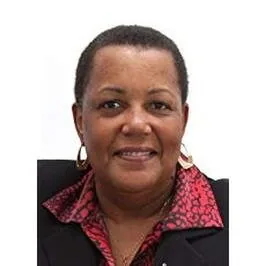
Joy Lawson Davis, Ed.D. is a career educator with over 40 years of experience as a practitioner, scholar, author and consultant. In addition to local district and university experiences, Davis served for five years as the Virginia State Specialist for K-12 Gifted services. A graduate of the College of William & Mary, Dr. Davis holds both master’s and doctorate degrees in Gifted Education. Davis has conducted workshops, been a long-term program consultant, and served as a keynote speaker and distinguished guest lecturer across the nation, in South Africa, the Caribbean, Dubai UAE & Turkey. Diversity Education and Gifted Education are her areas of special expertise. Dr. Davis served for five years on the Board of Directors of the National Association for Gifted Children. She has published numerous articles, technical reports and book chapters and is the author of the award-winning book: ***Bright,Talented & Black: a Guide for Families of African American Gifted Learners ***and Gifted Children of Color Around the World: Diverse Needs, Exemplary Practices and Directions for the Future, co-edited with Dr. James L. Moore III. Davis is the Special Populations columnist for the NAGC publication: Teaching for High Potential and serves on the Gifted Child Today advisory board. Dr. Davis was recently awarded the 2019 Lifetime Achievement Award from the Supporting Emotional Needs of the Gifted organization (SENG).
About Young Scholars Academy
Young Scholars Academy is a WASC-accredited virtual learning community offering 200+ live online courses and camps for gifted or 2e children ages 5–18, in classes of 6–8 students, led by neurodivergent mentors. Young Scholars Academy currently serves 1,200+ families across 47+ states and 17 countries, with a 93% semester-over-semester re-enrollment rate. ESA funding is accepted in 10+ states.
Explore Fall CoursesYou don't have to figure this out alone.
Right now, a kid who thinks like your kid is in a class they chose, with a mentor who was once just like them, surrounded by friends who don't think they're weird... they think they're interesting.
200+ courses for kids who think differently.
Live online. Classes of 6–8. Mentors who were these kids. WASC accredited.
Explore Fall CoursesTrusted by families like yours
1,200+ families across 47+ states. 93% re-enroll.
They found their people here. So can your child.
Explore Fall CoursesRecommended for readers of Twice-Exceptional
Find a twice-exceptional class that fits your child.
Small groups of 6–8, led by mentors who get how your kid thinks.
Explore Fall Courses5 Signs Your Gifted or 2e Child Is Being Under-Served
A free, practical guide — plus early invites to expert talks, AMAs, and new course launches.
No spam. Unsubscribe anytime.
You're in! Check your inbox for the guide. ✨
You're already in the village
Here's what's open right now.
Live online. Classes of 6–8. Mentors who were these kids. WASC accredited.
Explore Fall Courses