The Salt and Pepper of Supporting Clever, Quirky Kiddos
Mentoring 2e kids is like cooking—a blend of safety, inspiration, and talent development that helps clever, quirky learners thrive.
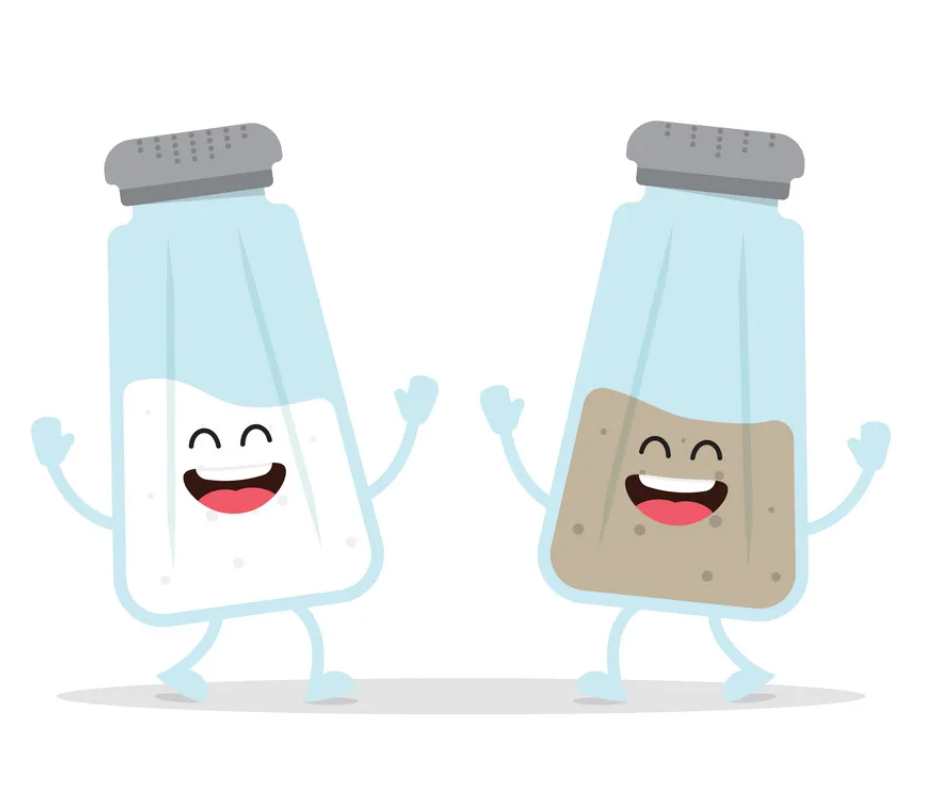
Whenever I think of mentoring twice-exceptional students, cooking comes to mind. Admittedly, I’m not much of a cook, but I do like to eat! Cooking is a true art form because it’s always fluctuating. A recipe may be consistent, but the process is never constant. Many factors shape the experience: the cook, the kitchen, preparation, presentation, ingredients, and the emotional and physical state of the consumer, among others.
Supporting clever + quirky, gifted, or 2e (twice-exceptional) students is similar. Though professionals and parents may be consistent, things never stay constant, the menu changes, and appetites differ. There are core ingredients, however. Mentoring is like salt that helps bring out the natural flavor.
This article will focus on how to judiciously apply that mentoring salt to three essential nutrient groups: Safety, Inspiration, and Talent Development.
Safety
As every cook knows, safety first.
Many clever, quirky kids have learned to shrink and blend in to hide their exceptionalities. They’ve been burned so many times that they become conditioned to locking down and resisting exposure and vulnerability. Mentors can help students feel safe. When we look at Abraham Maslow’s Hierarchy of Needs, we’re reminded that safety is the second most basic need after our physiological requirements. Students need to know that a mentor will create a safe space for them and that they will be protected.
Good mentors make sure students feel safe participating. Great mentors ensure that students feel safe failing! John Dewey once wrote, “Failure is instructive. The person who really thinks learns quite as much from his failures as from his successes.” In my own experience, this is the greatest way a mentor can empower his students: by teaching them how to fail and reflect on the experience. All too often students are conditioned to fear failure and that can really hurt their growth. A great mentor can teach students how to fail, reflect, and adapt.
Years ago, I purchased a 1956 Chevy Task Force pickup truck. To clean it up and get it running I was going to have to drill down to the core of the truck. I was terrified, however. Through a random series of events, I befriended a 79-year-old man named Fred, who I am proud to announce is my mentor and one of my best friends to this day. After spending 20-something years as a Department of Defense mechanic during the Cold War, Fred is the foremost expert on 1955-59 Chevy car and truck overdrive transmissions. Talk about a niche, right?
Fred’s content mastery and demeanor took away my fear of failure. I now felt free to make mistakes and learn from them in a safe way. I realized that I had to pay this gift forward. I included a gaggle of my 2e students in the truck’s restoration. I wanted to do for them what Fred did for me, create an inquiry-first environment that would allow us to think, collaborate, problem-solve—and make more problems to solve. I became their Fred–just not as cool.
Inspiration
Once our kids feel safe being themselves and coming out of their shells a bit, the real mentoring begins. Our kids need role models to look up to and to see that everything is going to be ok. When they work with a mentor who makes them feel seen, a funny thing happens. Some of that negative self-talk comes into question. Students who had been taught to think that they can’t do this or won’t be able to do that begin to realize that there are adults who had similarly been written off—until they got help to rewrite the script.
Simple comments can move mountains. Mentors expressing their struggles and tribulations can help 2e youngsters to realize that adults are imperfect and have their own challenges. A great mentor helps a child realize that success happens not only despite challenges, but because of them. In my own life, for example, a lot of my leadership and communication abilities developed because reading and writing had always been hard for me. I had to work on what felt good for me; talking, questioning, inspiring others. I developed these muscles because of my challenge areas, not in spite of them.
Feeling understood is just the beginning. Children need to feel like they are working for something bigger than themselves. Nothing takes us to greater heights than when we form a healthy attachment with someone who loves us for who we are, yet gently pushes us to be the best versions of ourselves.
2e students are no exception. When they work with a mentor who cares about and who they care about growth can be nurtured in ways beyond what they might expect.
A perfect example of a mentor-student relationship is Maya Angelou and Oprah Winfrey. Aside from being one of the greatest poets of all time, Angelou was a pivotal mentor for Oprah and inspired her to reach great heights! Oprah attributed her success to Angelou, whom she referred to as “mother.” Touchingly, Angelou called Oprah “daughter.” No better proof that mentors play a pivotal role—sometimes doing the work that parents cannot.
The maddening part for many parents is that a good mentor can say the same things that they have said until they’re blue in the face, but the mentor’s unique position as non-parent village elder has a funny way of sinking in with kiddos. You see, everyone has a role to play in the village. Parents often know best, but they can’t always get their kids to do what they know is right because they have to preserve their parent role. That’s where the mentor comes in!
Talent Development
Once students feel safe and inspired, it’s time to help them self-actualize and open up to the idea of developing their interests and talents. The critical part about working with twice-exceptional students is helping them straddle the divide between areas in which they are exceptionally talented and areas in which they are exceptionally struggling.
Returning to our cooking metaphor, an expert chef can improvise recipes for each student, helping them use their strengths and struggles to become master chefs of their own kitchens. To get our students “cooking with gas,” mentors must enable them to thrive. To realize this level of growth, gifted mentors must equip their mentees with agency.
Our students are often very intuitive and can see creative and unconventional pathways toward accomplishing their goals. Expert mentors can instill in students the confidence and tools to leverage their skills in society and gain the ingredients they require to be successful.
The most important thing that a mentor can do for a twice-exceptional child is to help them realize that they are unique and that that’s a great thing! Sometimes that means allowing youngsters to fail with grace. Lessening the fear of failure is integral in the reversal of the conditioning that has often taught young people to just blend in. True mentors help their students in acquiring the skills they require to stand out!
The right mentor is hard to find but rather than wait for just the teacher to appear, consider including your child in the process and using it as an opportunity to develop their executive function skills. Having your child break down this large task into smaller chunks of conducting research (Who do I have access to with the experience, patience, and willingness to help me?) and setting deadlines (How can we schedule the time I need?) might be an exciting way to lean into their interests and develop the skills they need for success. Remember, time is one of the most important ingredients in any meal.
Mentoring is baked into every course at Young Scholars Academy. Explore our virtual village and set up your child with neurodivergent and twice-exceptional mentors, today!
PS- Our transformative courses are currently open for enrollment, but are closing fast!!!!
About Young Scholars Academy
Young Scholars Academy is a WASC-accredited virtual learning community offering 200+ live online courses and camps for gifted or 2e children ages 5–18, in classes of 6–8 students, led by neurodivergent mentors. Young Scholars Academy currently serves 1,200+ families across 47+ states and 17 countries, with a 93% semester-over-semester re-enrollment rate. ESA funding is accepted in 10+ states.
Explore Fall CoursesYou don't have to figure this out alone.
Right now, a kid who thinks like your kid is in a class they chose, with a mentor who was once just like them, surrounded by friends who don't think they're weird... they think they're interesting.
200+ courses for kids who think differently.
Live online. Classes of 6–8. Mentors who were these kids. WASC accredited.
Explore Fall CoursesTrusted by families like yours
1,200+ families across 47+ states. 93% re-enroll.
They found their people here. So can your child.
Explore Fall CoursesRecommended for readers of Twice-Exceptional
Find a twice-exceptional class that fits your child.
Small groups of 6–8, led by mentors who get how your kid thinks.
Explore Fall Courses5 Signs Your Gifted or 2e Child Is Being Under-Served
A free, practical guide — plus early invites to expert talks, AMAs, and new course launches.
No spam. Unsubscribe anytime.
You're in! Check your inbox for the guide. ✨
You're already in the village
Here's what's open right now.
Live online. Classes of 6–8. Mentors who were these kids. WASC accredited.
Explore Fall Courses