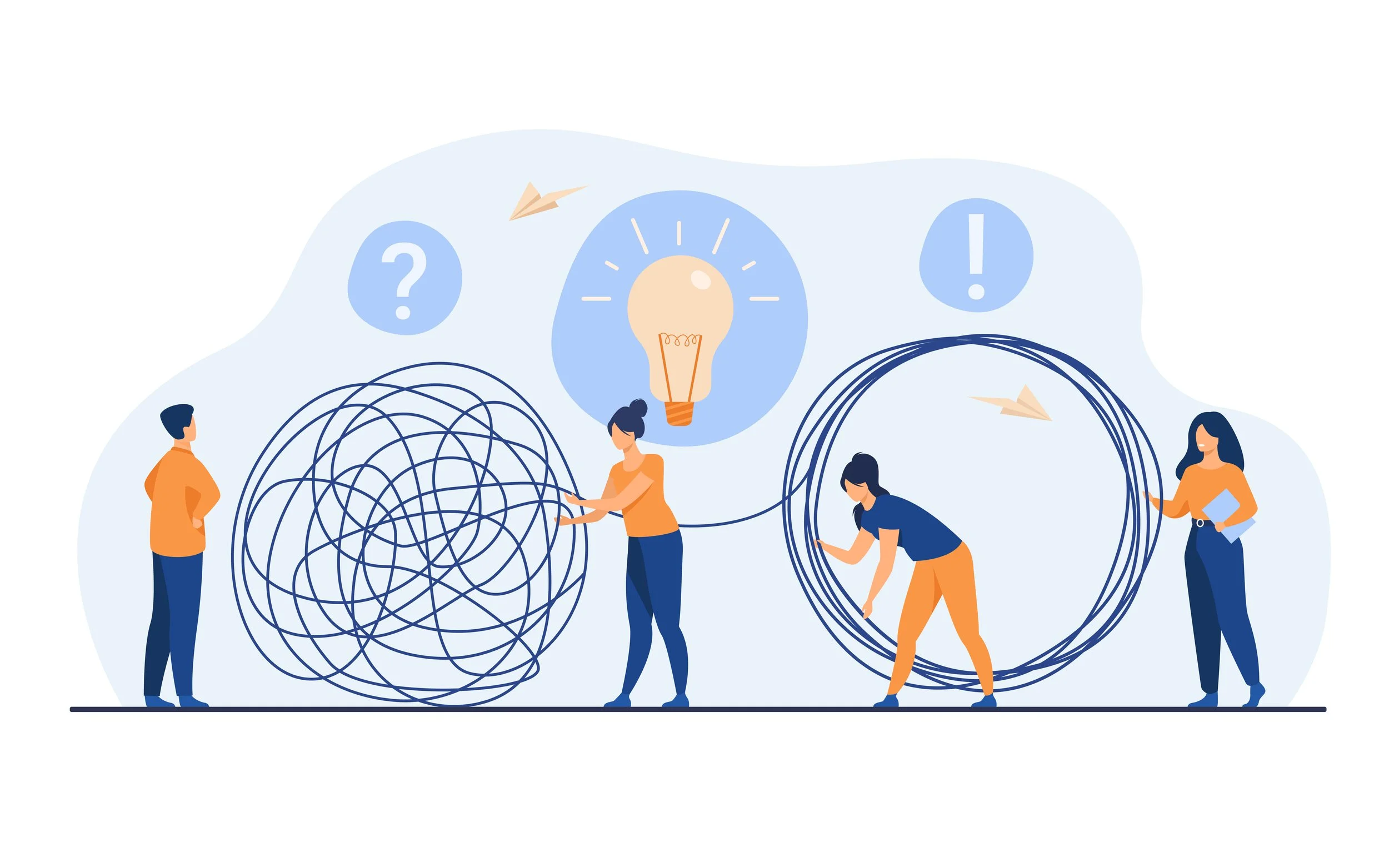
Is Grading Getting In The Way Of Learning?
Are letter grades undermining real learning? Why Young Scholars Academy ditched traditional grading in favor of feedback and intrinsic motivation.
“When asking a student what they got out of a class, they often say their grade.” Sir Ken Robinson, Creative Schools
This is tragic. The sad reality is that grading kills creativity. Just writing this will result in me losing some followers, I’m sure of it. That’s ok, it has to be said. To be honest, several years ago even I would have disagreed…
Over the past 10 years, I’ve had the distinct privilege of working with twice-exceptional kids in a variety of manners. What I found is that when I was wearing my academic teacher hat, I was often too rigid and focused on standards, rubrics, and grading. Tragically, I would squeeze the fun out of learning because I was so caught up in what I thought school had to look like.
Education is a funny thing, isn’t it? In a TED Talk by Sir Ken Robinson, he jokes that if you tell someone at a dinner party that you work in education, they run for the hills to avoid the dull conversation. However, if you ask someone what they think about education, they will practically trap you and talk your ear off.
School is one of those things that everyone’s experienced and has strong opinions about. Within education, grading is one of those things that I, like many others, always thought had to be a certain way simply because they had always been that way. It was as if I could not conceptualize core classes being run any other way.
On the other hand, when I taught my automotive shop class or took students abroad, I focused less on grades and was able to focus more on learning. When I was focusing on meaningful, authentic learning, the kids just did better. It was like the less I tried, the better we all did. At the time, I didn’t get it. Now, looking back, it’s so obvious. My projections of how student mastery should be measured could not have been more off. I was too caught up in letter grades. It wasn’t until later that I was largely able to abandon grades.
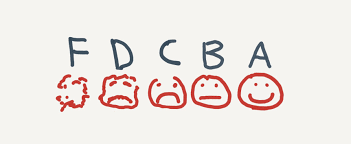
Now, before you burn me at the stake, I’m not saying that some students aren’t extrinsically motivated and that grades don’t have their place. What I am saying it that learning is so much bigger than grading and that we need to wake up and look beyond grades.
What we need is a shift from grading to assessing. Students need to be given personalized feedback. The feedback should take into consideration students’ two halves: their strengths and areas of difficulty. While the feedback should be modeled and overseen by the teacher, it should largely come from peers.
Learning how to effectively offer and receive constructive peer-to-peer critiques is one of the most important things that we can teach our kids. Being equipped to not only evaluate the performances of others, but to receive feedback from others is a life skill that many adults don’t master, but need to ;-)
Much of the research shows that we need to empower our students to critique themselves. Programs around the world are finding that when students are able to create the criteria upon which they are evaluated, it leads to much more meaningful assessments. Moreover, when students are then asked to evaluate their own performance, they often pick up on things that their teachers do not. This form of constant self-reflection leads students to become better critical thinkers because they are often stopping, pausing, reflecting, analyzing, and adjusting.
To wrap up this open letter to the educational community I’d like to set 2 intentions:
We need to grade less and learn more.
We need to empower our students to evaluate themselves and better offer/receive constructive feedback with/from others
At Young Scholars Academy, we’ve worked hard to commit to these 2 intentions. In fact, we’ve completely done away with grading. We exist as an enrichment program that seeks to do just that, enrich. We sincerely believe that the most important kind of learning is the learning that kids love to do. In order to foster this type of learning, we’ve moved as far away from grades as possible. If one were to enter our classes, they would be shocked that there are no grades, yet we get our students to work harder than ever.
How, you might ask? Because they are learning for the sake of learning! They feel safe to put take risks because they know their classmates will support them, not judge them. Don’t get me wrong, we still have a healthy level of fun competition, but it’s really all about students falling in love with learning and becoming intrinsically motivated. At the end of the day, our students know that at the end of each class they’re going to share their progress with their classmates and they’re going to be lifted-up and challenged =)
Click below to check out 2 courses that students are sure to exclaim they got a heck of a lot more out of than measly grades.
About Young Scholars Academy
Young Scholars Academy is a WASC-accredited virtual learning community offering 200+ live online courses and camps for gifted or 2e children ages 5–18, in classes of 6–8 students, led by neurodivergent mentors. Young Scholars Academy currently serves 1,200+ families across 47+ states and 17 countries, with a 93% semester-over-semester re-enrollment rate. ESA funding is accepted in 10+ states.
Explore Fall CoursesYou don't have to figure this out alone.
Right now, a kid who thinks like your kid is in a class they chose, with a mentor who was once just like them, surrounded by friends who don't think they're weird... they think they're interesting.
200+ courses for kids who think differently.
Live online. Classes of 6–8. Mentors who were these kids. WASC accredited.
Explore Fall CoursesTrusted by families like yours
1,200+ families across 47+ states. 93% re-enroll.
They found their people here. So can your child.
Explore Fall CoursesRecommended for readers of School & Learning
Find a school & learning class that fits your child.
Small groups of 6–8, led by mentors who get how your kid thinks.
Explore Fall Courses5 Signs Your Gifted or 2e Child Is Being Under-Served
A free, practical guide — plus early invites to expert talks, AMAs, and new course launches.
No spam. Unsubscribe anytime.
You're in! Check your inbox for the guide. ✨
You're already in the village
Here's what's open right now.
Live online. Classes of 6–8. Mentors who were these kids. WASC accredited.
Explore Fall Courses