Sensory-Friendly Halloween: Navigating Costumes And Parties With 2e Children
Practical, sensory-friendly tips for navigating Halloween costumes, parties, and trick-or-treating with twice-exceptional and neurodivergent kids.
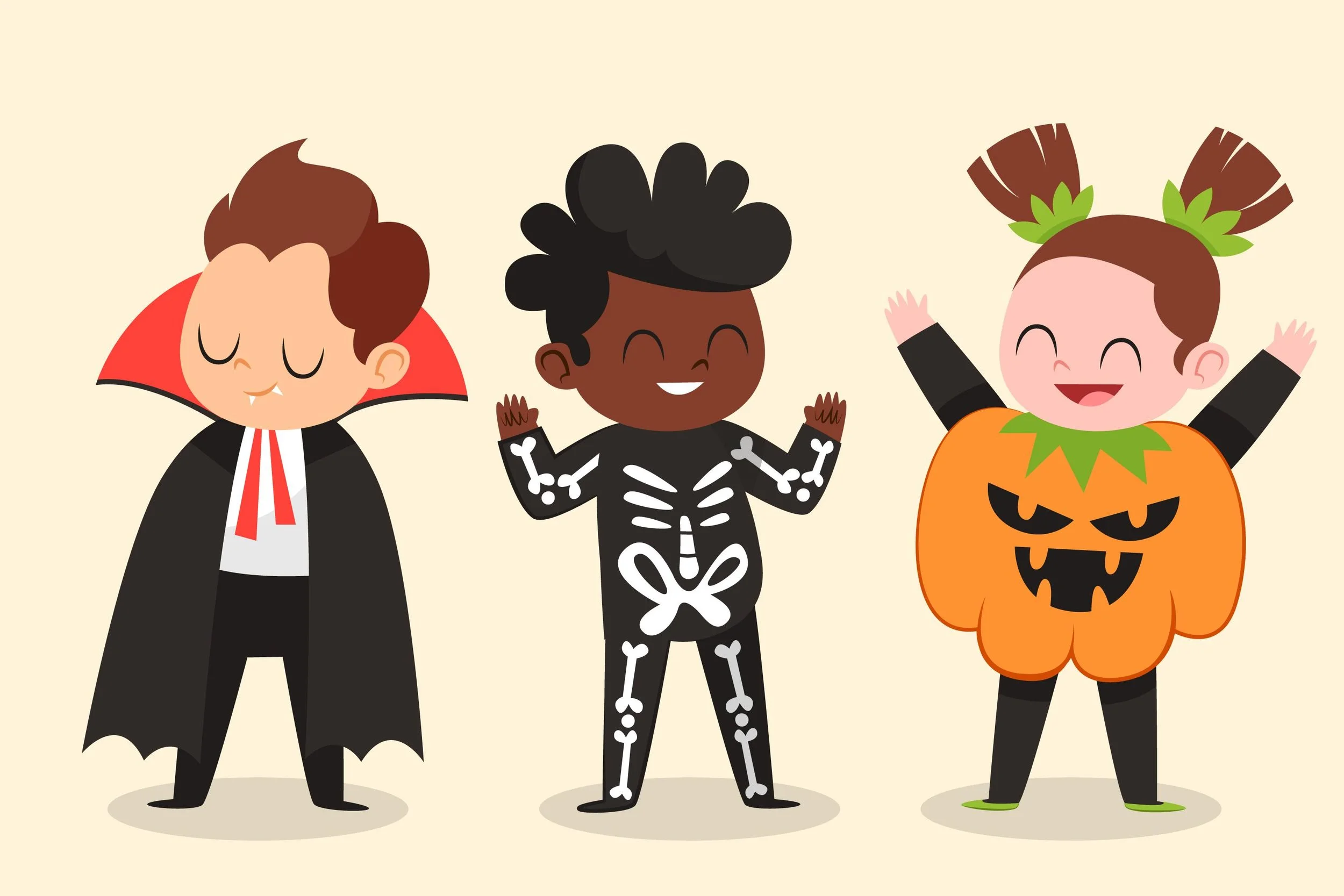
It was a dark and stormy night. The soft swish, swish is getting louder. A lone moan shatters the silence of the evening. It’s followed by a scream. A large cardboard, glow-in-the-dark head flies across the room. A head that you made, that you spent weeks planning and creating. A head that you had to learn all about because it is from an esoteric game your child plays, a head that has embedded LED lights that you learned how to connect and program specifically for this costume because this was SUPPOSED to be the year that your child finally went out trick or treating in a costume.
But now, the head lays crumpled at your feet and your child is trembling in rage and frustration with tears pouring down their face because this was SUPPOSED to be the year that they finally went out trick or treating in costume. You step over the head and embrace your child because you know how exhausting wearing masks on top of masks can be for them. It’s ok. Next year a costume might work. All that matters now is helping your child work through all of these feelings so that they can regulate and perhaps enjoy the evening in whatever manner helps them feel wholly themselves.
When my kids were younger, I often spent many, many hours creating costumes. I didn’t always create every costume (spiderman costumes are always easier to buy!), but I love dressing up, and I love Halloween and fall festivals and trick or treating. However, having 3 neurodivergent kids with heightened sensitivities means that we navigate the world differently than our neurotypical friends. Here are a few tips and tricks I picked up through the years.
1. Plan early.
My kids almost always wanted to be unique costumes – a rain cloud, a supporting character in a one-off video game, an electron, a colorful pineapple… I just never knew what they were going to pick. I found that by asking them what they wanted to be in the first week of October, I would have enough time to either order a costume or make one. Anything later than that meant they had to either use something we already had or something we could easily get from a box store.
2. Have a backup.
You may be asking, “What happens if they change their mind?” I’m glad you asked! For the example above when my kiddo didn’t want to wear the costume we made, I had already ordered a costume I knew was comfortable and I knew he would like. Costumes don’t always have to be expensive or custom. For this child, we knew that his many sensory needs would most likely make wearing a complicated costume difficult. He liked onesies and sweats, so I just ordered a pajama set that also could double as a costume, and he happily went out like that. Easy backups can also be previous year costumes, dressing as a parent or sibling, zombies (a little face paint and town clothes), etc.
3. Keep a box of costumes.
My kids all loved dressing up, so we have always kept a box of costumes. Every year, we pull it out, and they go through them to see if anything sparks their imagination or curiosity. We weed out anything that is now too small (and pass it on to neighbors or our school costume box). This is often where we come up with our “backup plans”. After Halloween, we also hit the costume store and box stores to score costumes for the next year at a deep discount. We always size them up a bit. This is also a great time to go to thrift stores and see what pieces they have for sale.
4. Scour the web for ideas.
For those kiddo with big ideas on what they want to be (a quark, an aardvark, Ruth Bader Ginsberg) or with no idea what they want to be, the internet has a ton of great ideas. I’ve often had to look up how to do different things or see how others may have done a similar concept. There are so many cosplay videos out there, and they almost always have great tutorials on how they do different looks and techniques. For my kids that don’t know what they want to be, I just look up something like “costumes for kids” and we look at images together.
5. Keep sensory needs in mind.
Most of our 2e kids also have specific sensory needs. Honoring these needs can really help make any evening go more smoothly. If you have a child who is very sensitive to clothing, make sure the costume feels good to them before the time they are supposed to wear them so you have time for a backup plan. Pajamas and onesies can often make great costumes for kids who don’t like anything that is itchy or feels tight. Kids who need a lot of movement may need costumes that aren’t restricting (like cardboard shells). Have an idea or plan on what may happen to any handheld prop (lightsabers, staves, wands, etc). We usually make holsters or back straps so that they can put their props away while trick or treating.
6. Know when to call it.
2e kids, like all humans, have a point when they are done. We need to honor that point, wherever it is. One of my children can only stay at school with parties for about 20 mins. Then he is just too overwhelmed. So, he comes home early. One of my kids loves parties, so I make arrangements for him to stay as long as possible and get a ride back. Some kids don’t like parties at all. This year, I think one of my children will just stay in and watch spooky movies and drink apple cider. It’s ok for everyone to want to celebrate a holiday or tradition differently. And, as best as possible, coming up with a plan for everyone to get what they need before an event makes it much easier to enjoy it. And, when all else fails, call it a day or night and go home.
Of course we can’t always plan for every contingency, and sometimes even the best laid plans go awry. We are only human. Our kids are only human. We can only try our best to honor their autonomy, celebrate their strengths, and support their challenges. This goes for all parts of their lives. Sometimes it can mean that traditions we celebrate now don’t look the same as the way we celebrated when we were kids. That’s ok.
You got this, friend!
I hope you have a wonderful, sensory-friendly, and strength-based Halloween or whatever costume-driven event you celebrate.
Comment your best tips below for others!
About Young Scholars Academy
Young Scholars Academy is a WASC-accredited virtual learning community offering 200+ live online courses and camps for gifted or 2e children ages 5–18, in classes of 6–8 students, led by neurodivergent mentors. Young Scholars Academy currently serves 1,200+ families across 47+ states and 17 countries, with a 93% semester-over-semester re-enrollment rate. ESA funding is accepted in 10+ states.
Explore Fall CoursesYou don't have to figure this out alone.
Right now, a kid who thinks like your kid is in a class they chose, with a mentor who was once just like them, surrounded by friends who don't think they're weird... they think they're interesting.
200+ courses for kids who think differently.
Live online. Classes of 6–8. Mentors who were these kids. WASC accredited.
Explore Fall CoursesTrusted by families like yours
1,200+ families across 47+ states. 93% re-enroll.
They found their people here. So can your child.
Explore Fall CoursesRecommended for readers of Parent Support
Find a parent support class that fits your child.
Small groups of 6–8, led by mentors who get how your kid thinks.
Explore Fall Courses5 Signs Your Gifted or 2e Child Is Being Under-Served
A free, practical guide — plus early invites to expert talks, AMAs, and new course launches.
No spam. Unsubscribe anytime.
You're in! Check your inbox for the guide. ✨
You're already in the village
Here's what's open right now.
Live online. Classes of 6–8. Mentors who were these kids. WASC accredited.
Explore Fall Courses